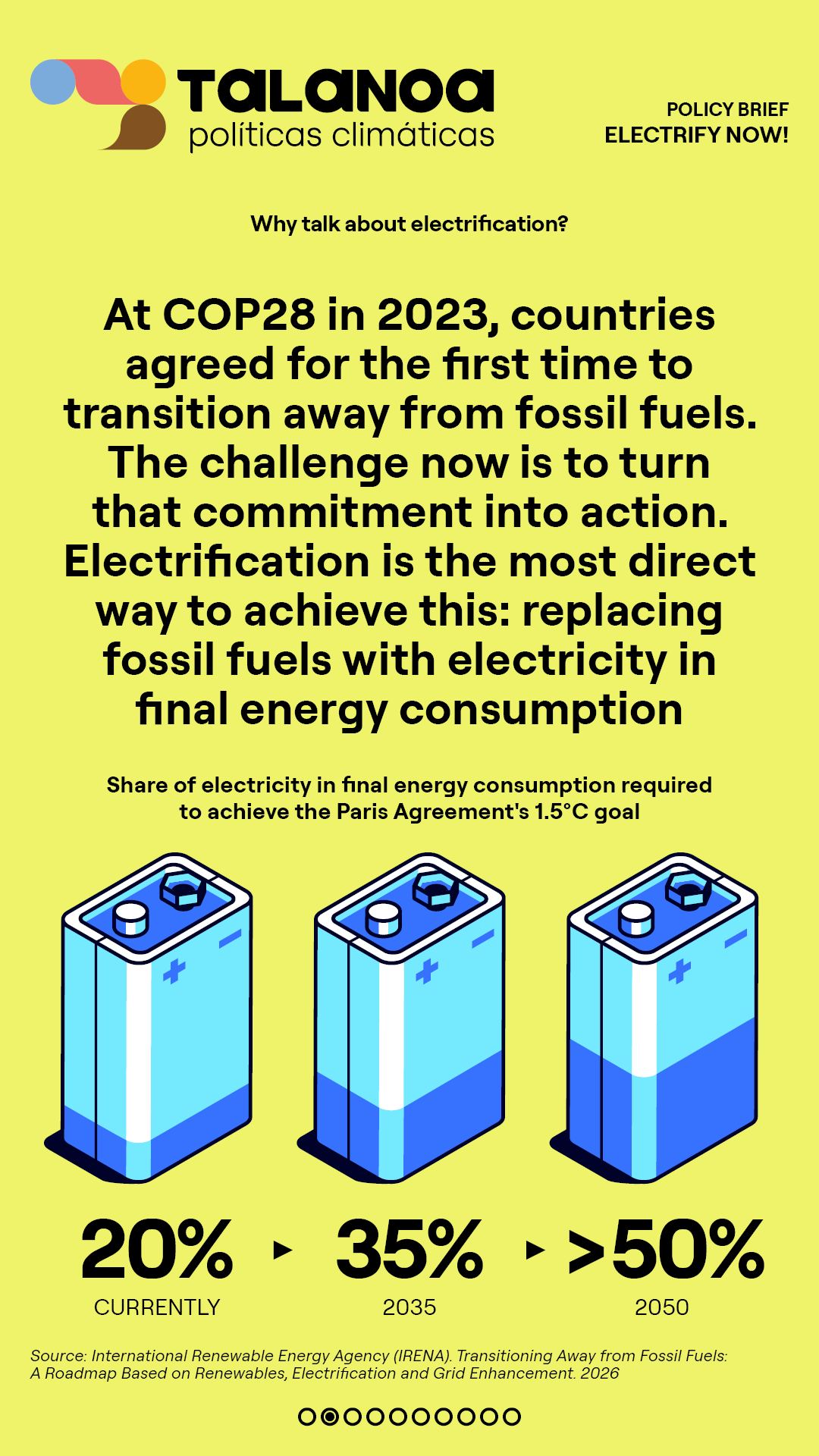
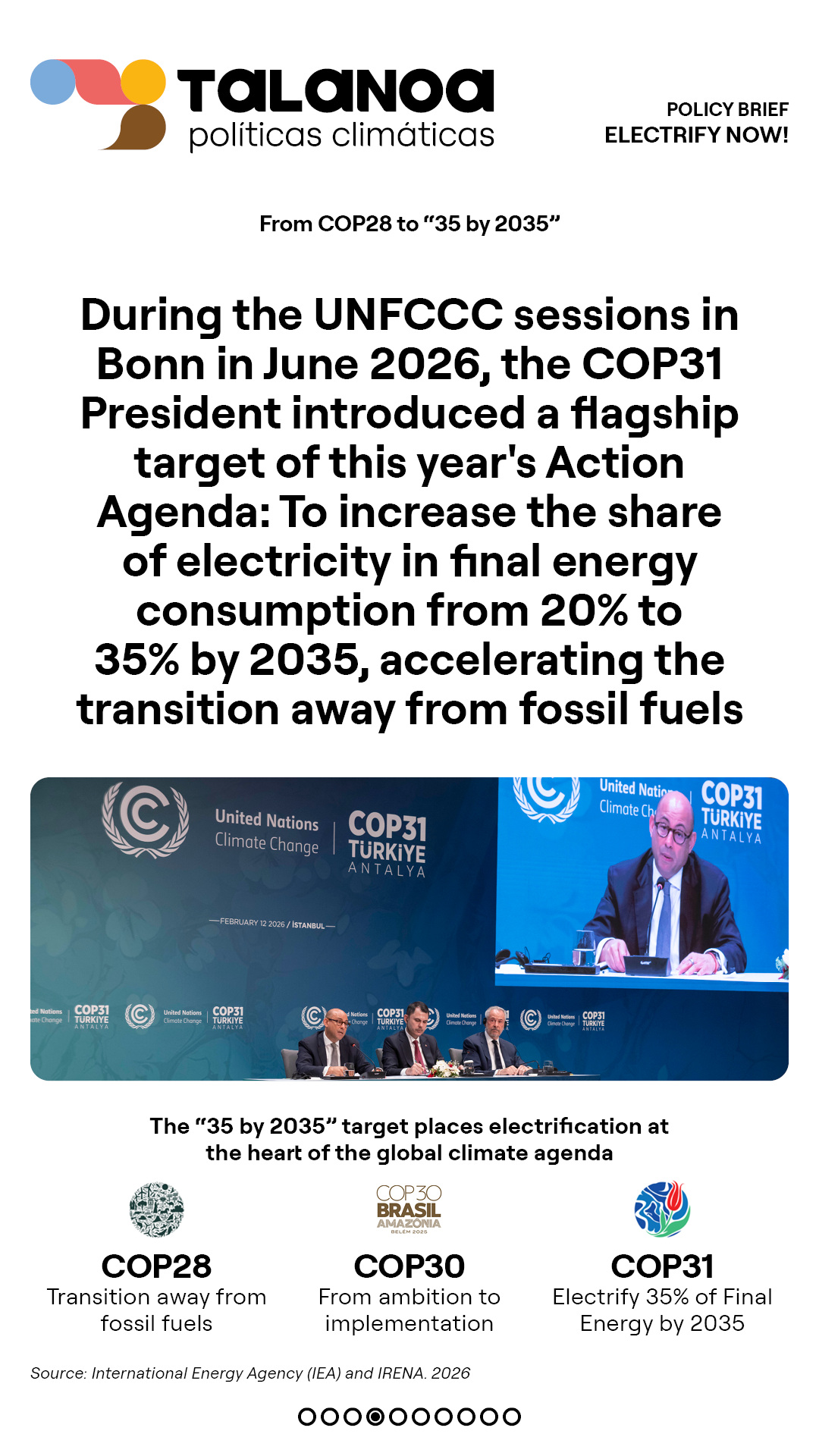
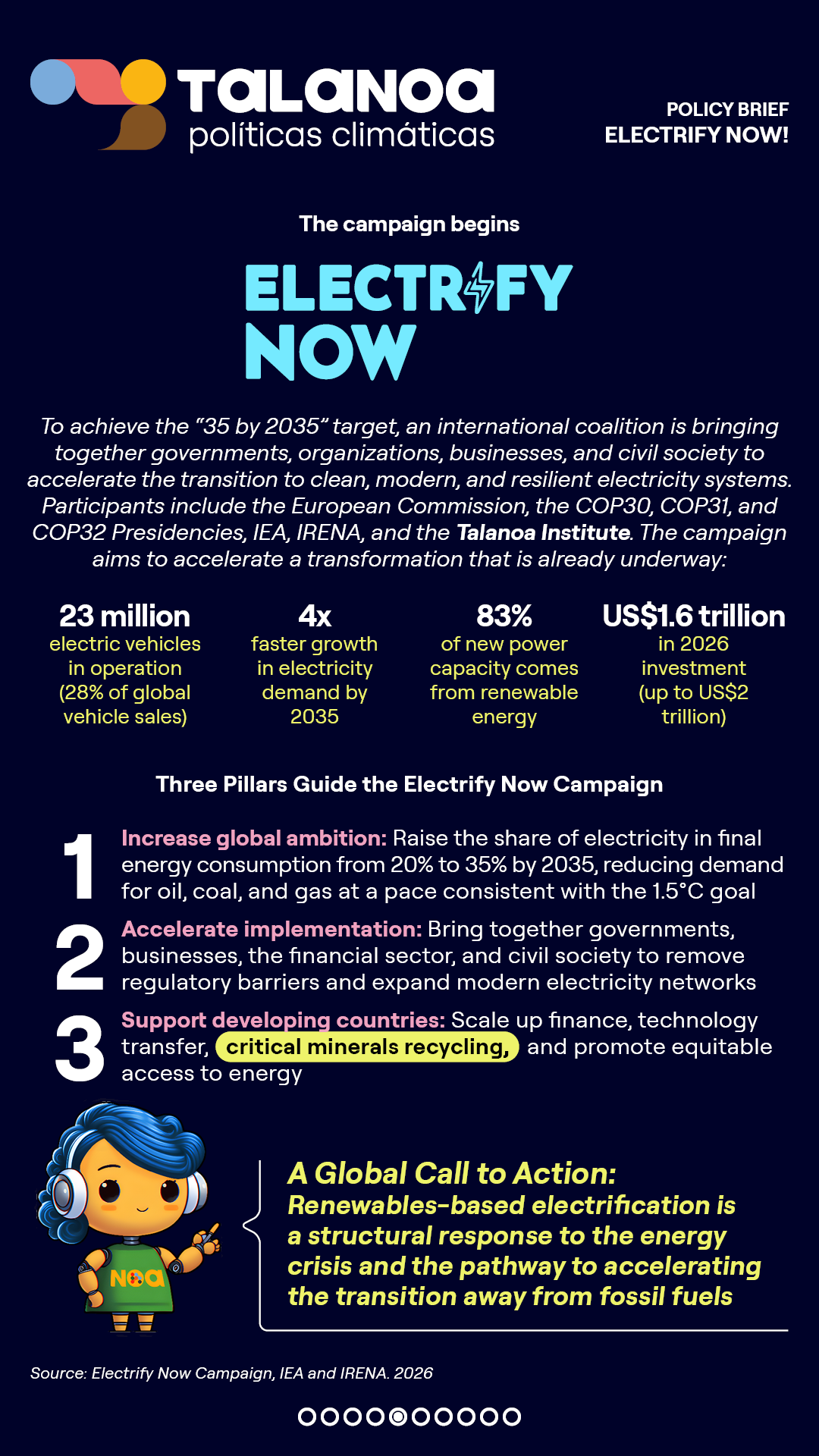
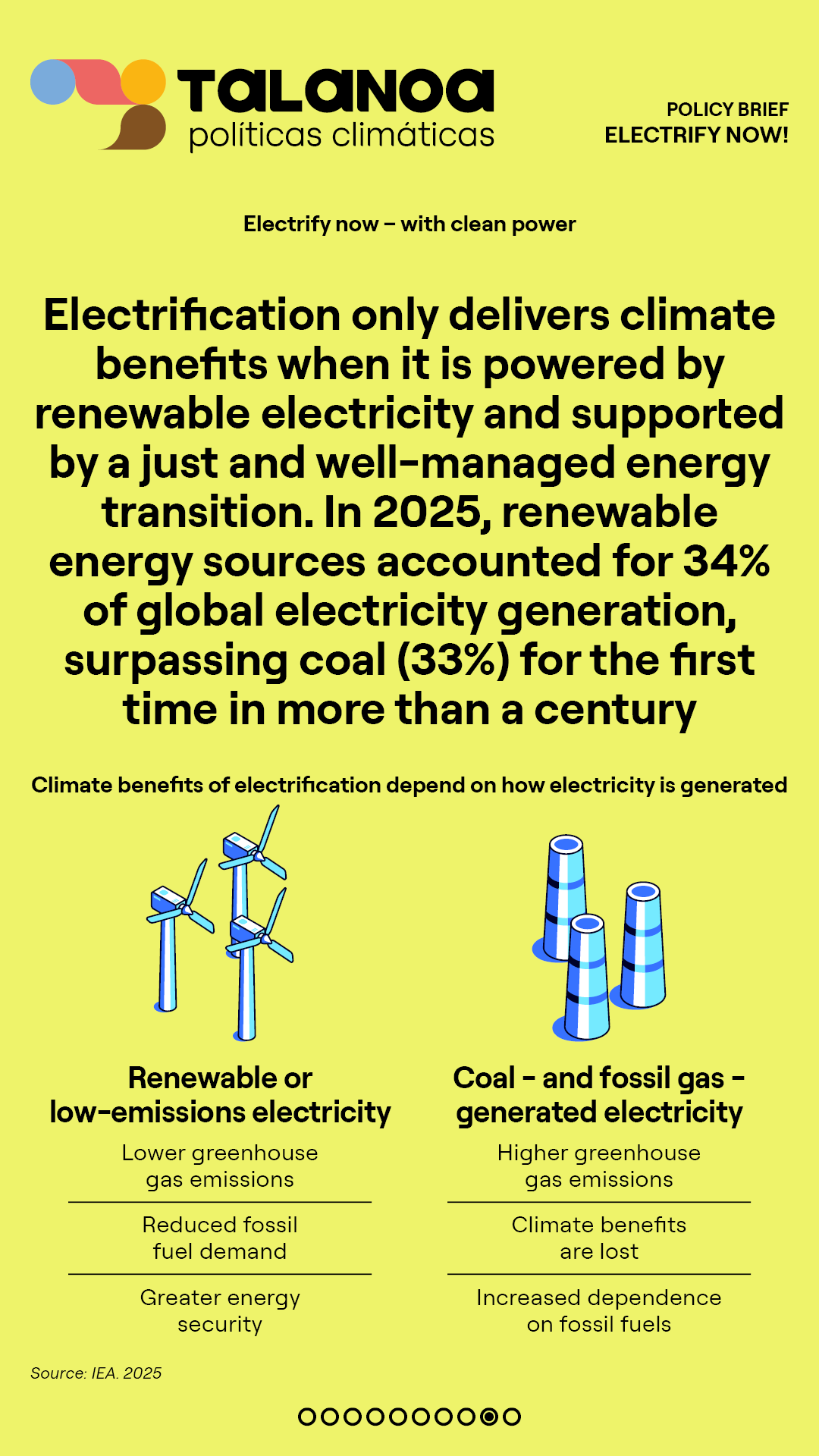
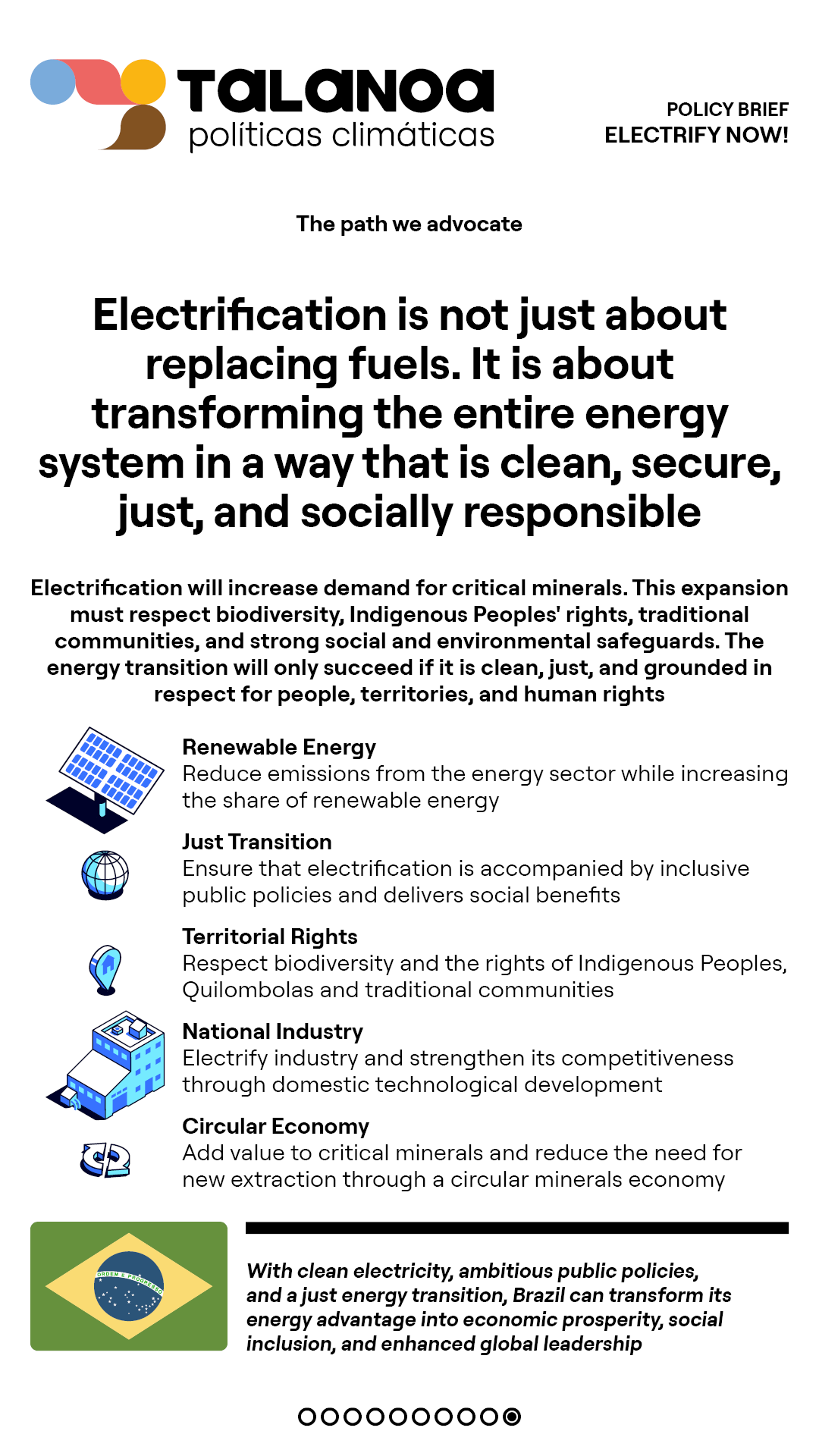
At the Bonn Subsidiary Bodies Meetings (SB64) in June, Türkiye, as the COP31 Presidency, presented the flagship goal of its Action Agenda: increasing electricity’s share of final energy consumption from the current 20% to 35% by 2035. If, and only if, powered by renewable energy sources, this target has the potential to accelerate the transition away from fossil fuels.
The week following the Bonn meetings, the global Electrify Now campaign was launched during London Climate Action Week. Instituto Talanoa is one of the initiative’s partners.
The campaign is built around three pillars: increasing global ambition through the “35 by 2035” target; accelerating implementation by bringing together governments, businesses, and other stakeholders to remove regulatory barriers and expand modern electricity grids; and supporting developing countries through financing, technology transfer, incentives for mineral recycling, and equitable access to energy.
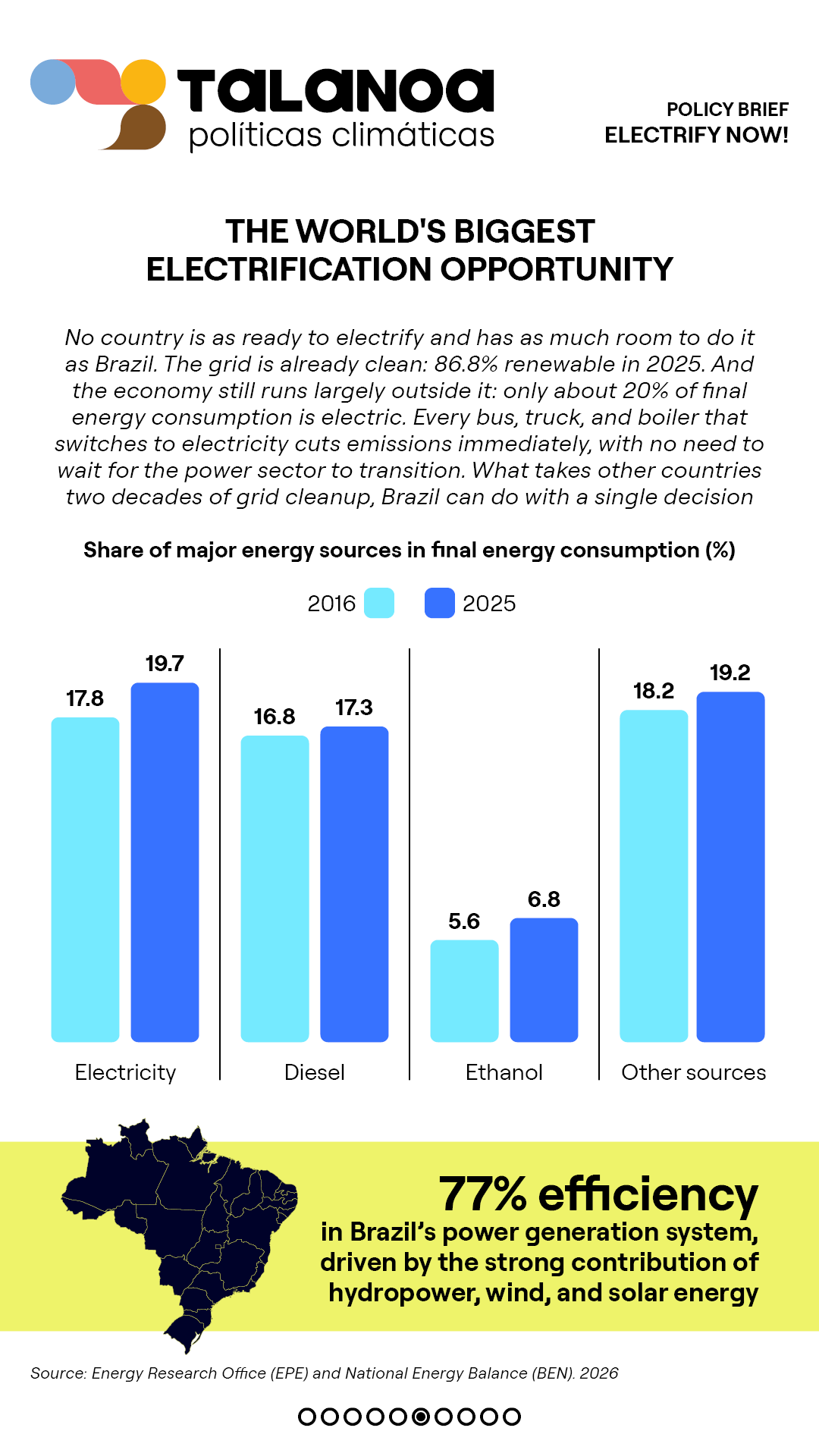
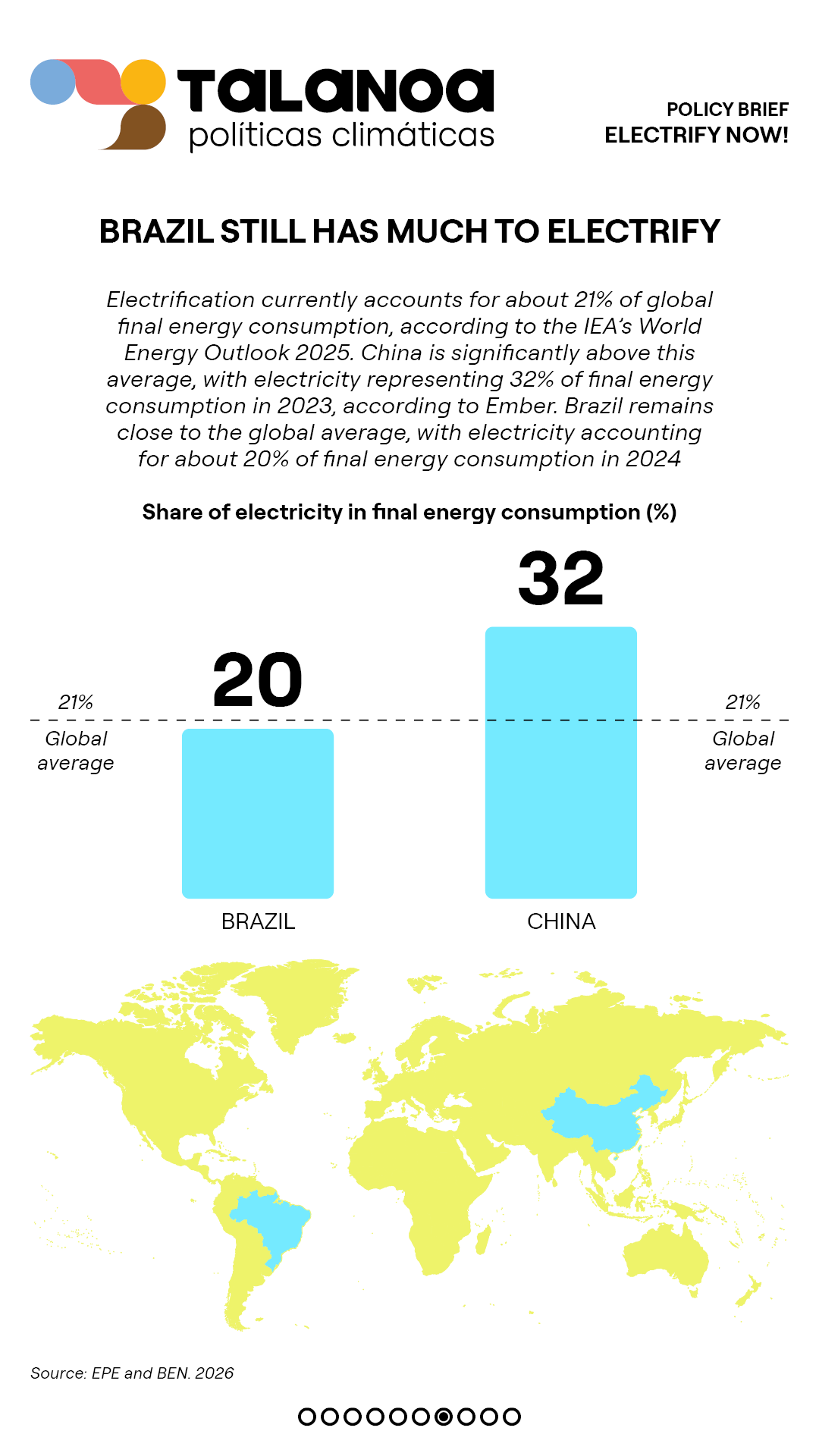
Brazil, with one of the cleanest electricity systems in the world—88% powered by renewable sources—is well positioned in this transition. However, the challenge of electrification remains. According to the 2026 National Energy Balance (BEN), electricity’s share of final energy consumption increased from 17.8% to 19.7% between 2016 and 2025. This pace must accelerate.
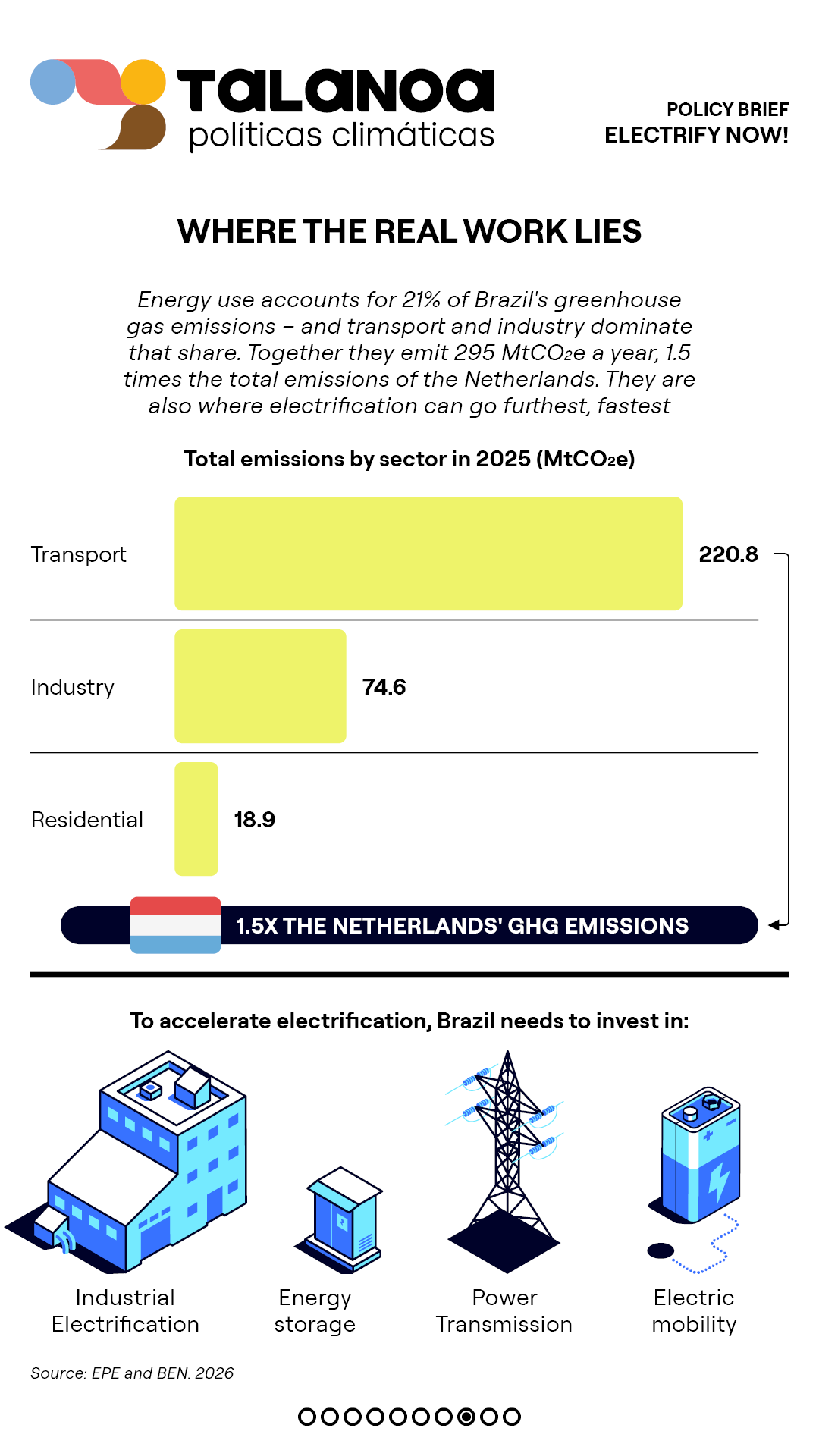
This week’s Tá Lá no Gráfico provides an overview of electrification in Brazil and around the world.